Platform

The architecture behind Outcome Formation.

The experience is simple: bring an intent, receive a credible formation and a path toward the outcome. Underneath it sit layers of formation intelligence, regenerative reasoning, a shared semantic model, and trust infrastructure designed for multi-party systems.

Platform layers

Complexity behind the experience. Clarity in front of the user.

Each layer is labelled with its current status so it is clear what is available today, what is demonstrated, and what is designed or planned.

Current
Available and published today.
Demonstrative
Shown through illustrative product experiences such as the Formation Lab.
Designed
Architecture defined; implementation in progress.
Future
Planned capability on the roadmap.
  1. 01 · Experience layer

    Outcome Formation

    Demonstrative

    The surface people use: state an intent, see what it requires, watch the Formation Network form, compare candidate paths, and work in a living Outcome Workspace.

    • Intent capture
    • Requirements
    • Formation Network
    • Credible paths
    • Outcome Workspaces
  2. 02 · Formation intelligence

    From requirements to the shortest credible path

    Designed

    Determines what an outcome requires, assembles candidate participants and capabilities, resolves constraints, and synthesizes the configurations worth acting on.

    • Capability matching
    • Constraint resolution
    • Network synthesis
    • Candidate configurations
    • Shortest credible path
  3. 03 · Regenerative intelligence

    RPM + RPT + RDS

    Designed

    Defines what good means in context, reveals the structure of the system, and governs whether consequential action has earned the right to move.

    • Prosperity frame
    • Systems reasoning
    • Decision gates
  4. 04 · Semantic foundation

    Regenerative Systems Model (RSM)

    Current

    An extensible semantic model for participants, intentions, capabilities, relationships, formations, evidence, and outcomes across organizational and domain boundaries. Published at RSMOne.

    • Foundational kinds
    • Domain extensions
    • Interoperable context
  5. 05 · Trust and governance

    Trust that stays attached to action

    Designed

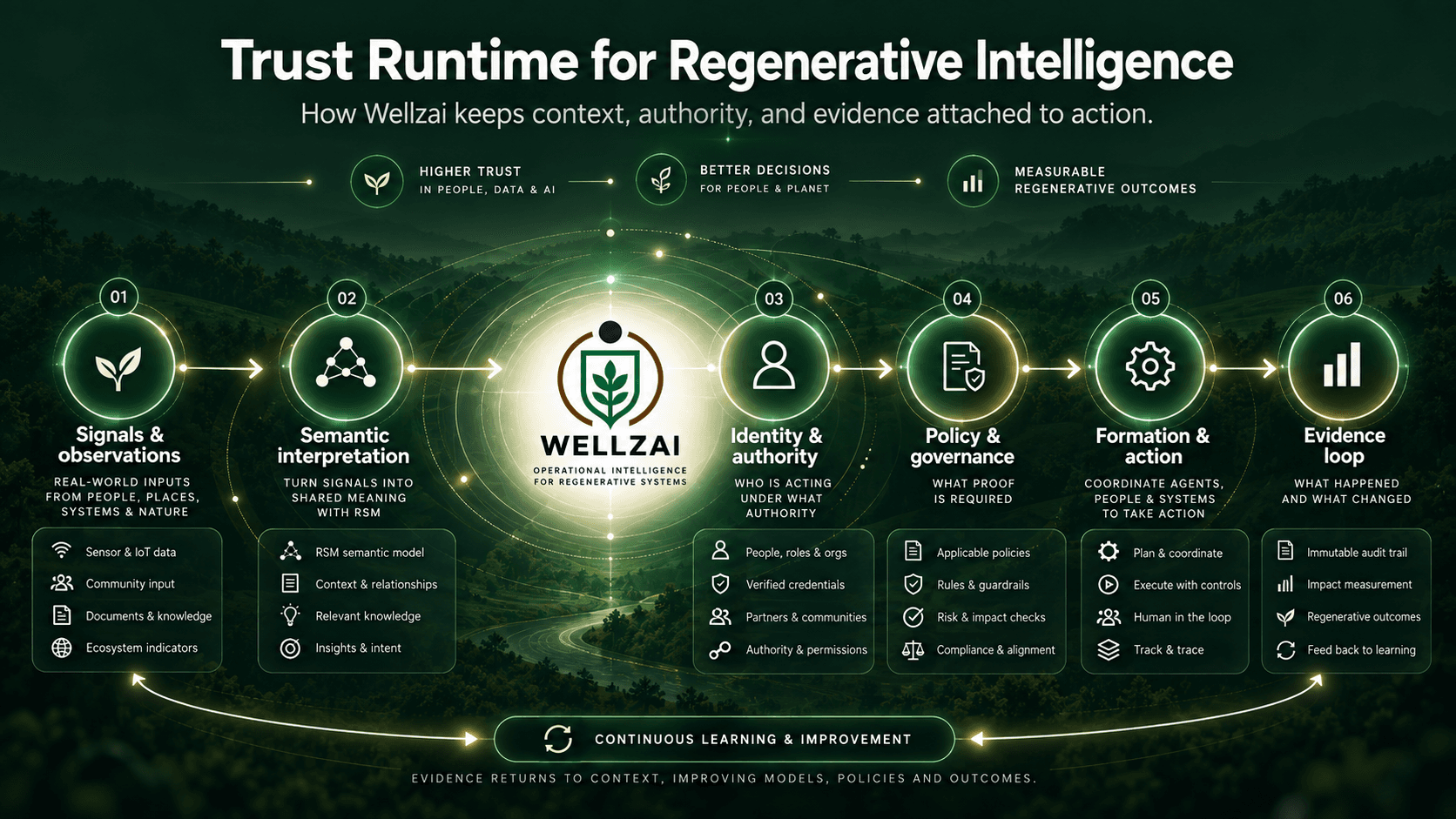
    Keeps identity, authority, provenance, evidence, policy, and permissions attached to every relationship and decision in a formation.

    • Identity
    • Authority
    • Provenance
    • Evidence
    • Policies
    • Permissions
  6. 06 · Data and ecosystem integration

    Signals from the systems that already exist

    Future

    Connects the formation to enterprise systems, partner data, documents, field data, and external signals without losing meaning at the boundaries.

    • Enterprise systems
    • Partner data
    • Documents
    • Field data
    • APIs
    • Signals

Visual platform story

See the system, the operating model, and the trust runtime.

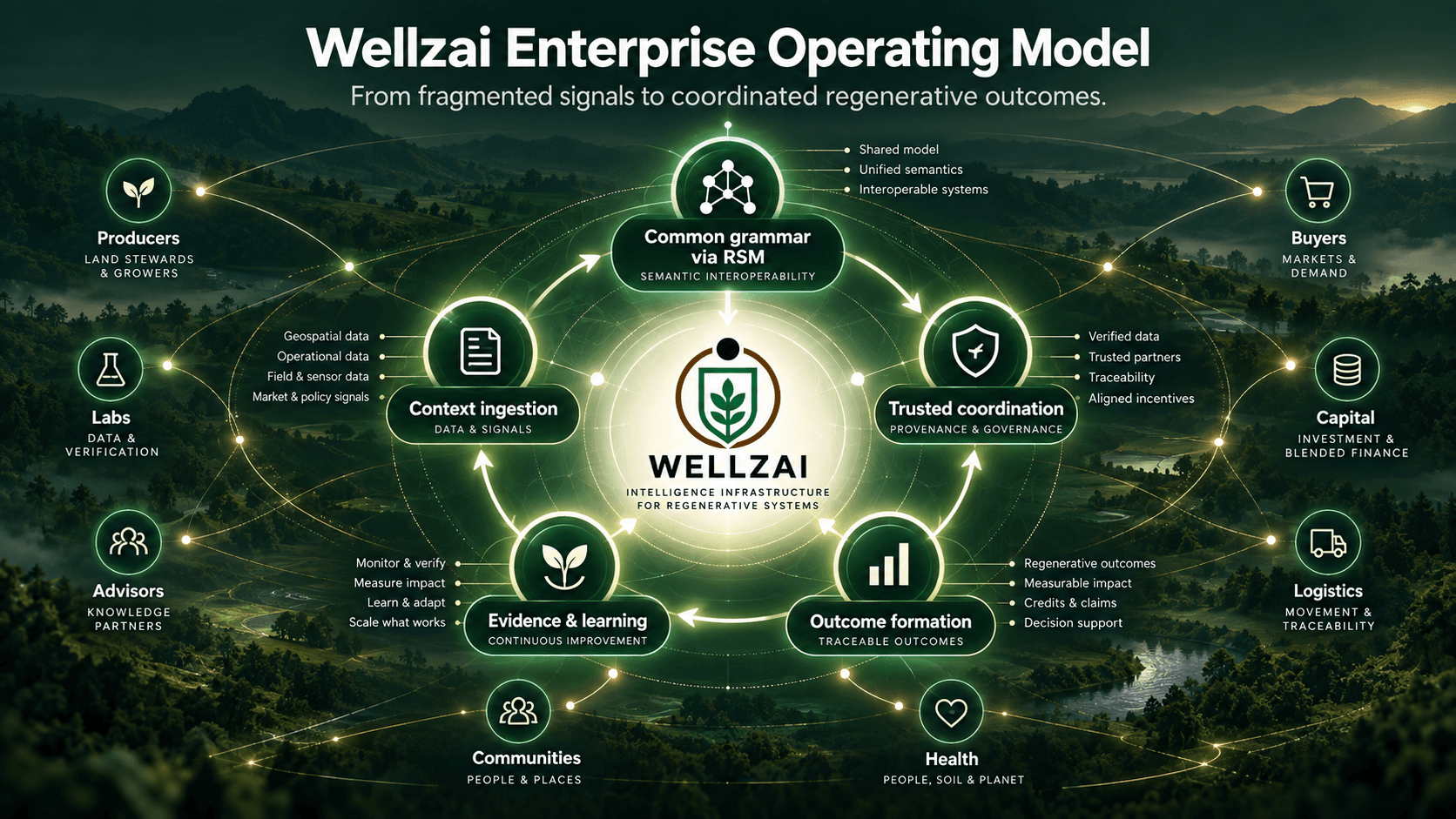
Three views of the same architecture: how context moves through RSM into formation, how the operating model coordinates participants, and how trust stays attached to action.

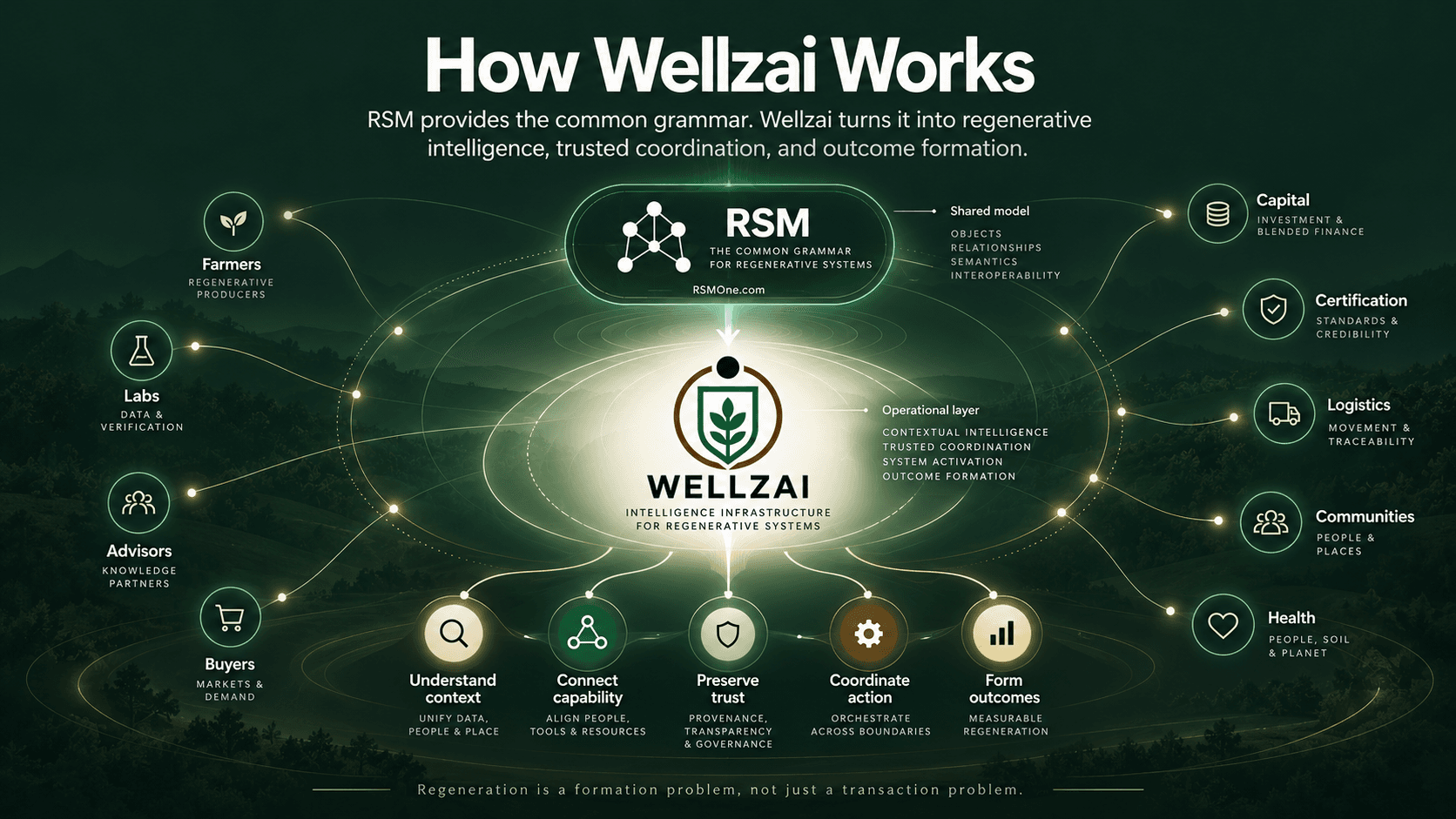
How Wellzai works overview diagram

System overview

How Wellzai works

A concise visual summary of how Wellzai uses RSM to turn context into regenerative intelligence, trusted coordination, and outcome formation.

  • Context enters from producers, labs, buyers, communities, and capital
  • RSM provides the common grammar for interoperability
  • Wellzai operationalizes trust and forms coordinated outcomes

Platform capabilities

Designed for environments where context, trust, and coordination matter.

Wellzai is neither a generic chatbot nor a thin marketplace. It is a structured intelligence layer for outcomes that depend on many participants.

01

Interoperable context

Bring together field signals, documents, ecosystem data, and human context without losing meaning at the boundaries between systems.

02

Trusted coordination

Keep identity, authority, provenance, and policy attached to action so recommendations and automations remain inspectable and governable.

03

Outcome formation

Move beyond static directories and marketplaces by assembling the right participants, proof, and next steps around a specific regenerative outcome.

04

Evidence and learning

Make claims traceable, capture what changed, and feed new evidence back into future coordination so the system improves over time.

From infrastructure to formation

Every layer exists to help a real outcome form.

Semantic understanding, network synthesis, trust, evidence, and governance become useful only when they help form a real outcome. The Formation Lab shows them working together on one.

  1. Intent
  2. Requirements
  3. Network
  4. Credible Path
  5. Formation
Experience the Platform Through a Formation

Bring us an outcome

Put the architecture to work on your outcome.

Start with what your organization is trying to make happen. The platform is designed around forming it.